The Enlightenment's Spark: Philosophers and the French Revolution
The French Revolution was not merely a political uprising; it was the culmination of powerful intellectual currents stemming from the 18th-century Enlightenment. Philosophers provided the ideological foundation, challenging the legitimacy of the absolute monarchy and the feudal system.
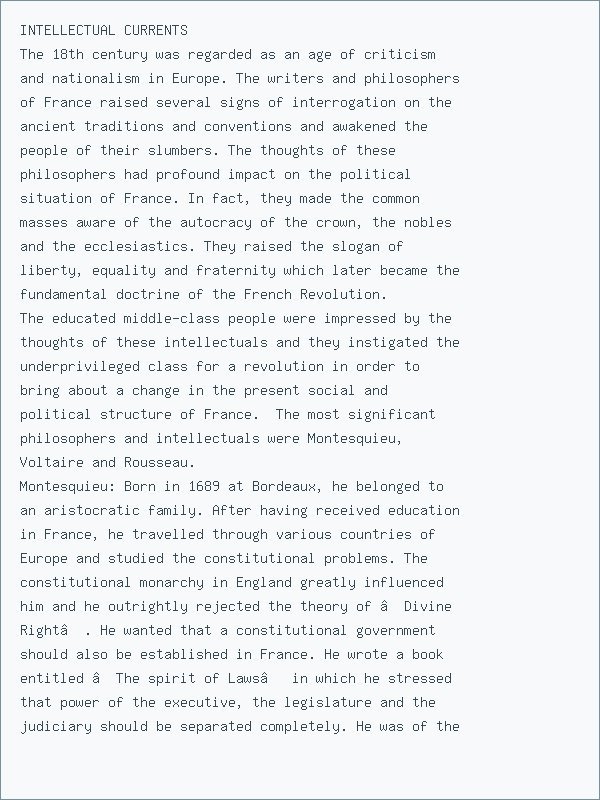
Jean-Jacques Rousseau was pivotal. His concept of the "Social Contract" argued that legitimate political authority rests on the General Will of the people, not the divine right of a king. This idea directly fueled the revolutionary call for popular sovereignty and a republican form of government.
Baron de Montesquieu, in The Spirit of the Laws, championed the separation of powers—dividing government into executive, legislative, and judicial branches. This structural blueprint became fundamental to the revolutionaries' desire to prevent tyranny and establish a system of checks and balances.
Meanwhile, Voltaire relentlessly attacked the Catholic Church's influence and the injustice of the old order, advocating fiercely for freedom of speech, religion, and a more humane legal system. His commitment to liberty and reason inspired the demands enshrined in the Declaration of the Rights of Man and of the Citizen.
These thinkers did more than criticize; they offered a new vision of society based on reason, liberty, and equality, ultimately providing the intellectual justification and language for the French people to overthrow the Ancien Régime.
File Information
Intellectual currents 0r Contr...
14.94 KB • APPLICATION/VND.OPENXMLFORMATS-OFFICEDOCUMENT.WORD
14.94 KB • APPLICATION/VND.OPENXMLFORMATS-OFFICEDOCUMENT.WORD
Description
Learn more about this note
.
Content Notice
All study notes available on ShareMyNotes are uploaded by members of the community for educational and reference purposes only. Browse our complete collection of study materials. ShareMyNotes does not claim ownership of any third-party content and does not host or promote copyrighted books or official publications.
We conduct manual inspections and periodic reviews of uploaded content. Users can report or flag any note they believe violates copyright or platform policies using the flag option available in the actions section of each note. Reported content may be removed at any time upon review. Learn more about our content policies.
If you are the rightful copyright owner or an authorized representative and believe that any content on this page infringes your copyright, please contact us for prompt removal. Check our Terms of Service for detailed policies.
Related Articles & Resources 1
Intellectual currents of contribution of philosophers towards the French revolution
Actions
This content is community-uploaded for educational use. Use the flag option to report copyright concerns. Learn about our uploading guidelines.
Preview Download Login to Like81
Downloads
0
Likes
258
Views
💚 Support ShareMyNotes ☕
ShareMyNotes is built with one goal — to help students access quality notes and study material for free, without barriers.
Creating, reviewing, hosting, and maintaining these resources takes time, effort, and real costs. If this note helped you even a little, your support can make a big difference.
Even ₹10–₹50 helps us keep ShareMyNotes running, improving content quality, and supporting thousands of students like you ❤️
☕ Buy Me a Coffee100% of donations are used to maintain and improve ShareMyNotes and to keep this platform free and accessible for students.
No pressure — your support simply helps us continue this mission.
Flag and Report
Notice an issue with this note? You can report it using the option below.
More Books You May Like
Hand-picked resources to boost your learning
Curated


About the Author

Featured Blogs

ShareMyNotes.in: Revolutionize Your Learning with the Ultima ...
Nov 08, 2025
441
1

Best Biology Handwritten Notes for NEET Toppers
Nov 25, 2025
2,196
0

Top Education Discussion Forums You Should Join
Nov 26, 2025
9,386
0

Where to Find CBSE Class 10 & 12 Previous Year Question Pape ...
Dec 02, 2025
920
0

Free IIT JEE Notes PDF | Physics, Chemistry & Maths
Dec 26, 2025
2,693
0
Discussion Forum
Join the community discussion forum
155
Topics
90
Replies
Recent Topics:
Which book should I read for self improvement and ...
gitanshthegamer
6 days ago
Explain the importance of biodiversity in maintain ...
chhaviraikwar2114
10 days ago
What is homeostasis? Explain why maintaining stabl ...
chhaviraikwar2114
10 days ago
Comments 0
No comments yet. Be the first to share your thoughts!